Joint Attention: Why It Matters and How ABA Builds It
In short: Joint attention is the ability to share focus on an object or event with another person. It is a critical milestone for social and language development. ABA therapy uses structured, positive methods to teach joint attention skills, often covered by insurance and Medicaid.
Key takeaways
- Joint attention is the shared focus between two people on an object or activity, vital for communication and social bonding.
- Children with autism often struggle with joint attention, which can delay language and social skills.
- ABA therapy breaks down joint attention into small, teachable steps using reinforcement and natural teaching moments.
- BCBAs design individualized programs that pair rewards with pointing, showing, and eye contact during play.
Find your child's ABA provider
About 60 seconds · free & confidential
- ✓ Vetted, BCBA-led providers
- ✓ In-home, center & telehealth
- ✓ No obligation, ever
What Is Joint Attention and Why Does It Matter?
Joint attention refers to the shared focus of two people on an object, event, or topic. It's the moment a child looks at a toy, then at a parent, and then back at the toy to share the joy. This skill emerges naturally in infancy but develops differently in many children with autism. Without joint attention, learning language, understanding social cues, and forming relationships becomes much harder.
Research shows that joint attention is a strong predictor of later language and social outcomes. Children who master joint attention early tend to have richer vocabularies and smoother peer interactions. That's why many ABA programs prioritize this skill from the very first sessions.

🔗 Related reading: ABA Pre-Authorization: A Step-by-Step Guide · Nearby ABA Therapy
The Developmental Milestones of Joint Attention
Joint attention isn't one skill-it's a sequence of abilities that typically unfold between 9 and 15 months of age.
Responding to Joint Attention (RJA)
This is the ability to follow another person's gaze or point. For example, when a parent points at a bird and the child looks toward it. Many children with autism struggle with this, even when they understand the word being said.
Initiating Joint Attention (IJA)
This is the more complex skill of actively drawing another person's attention to something interesting. It might be pointing at a favorite toy, showing a drawing, or making eye contact while holding up a snack. IJA is often harder for autistic children than responding.
Shared Emotion
The richest form of joint attention includes a shared emotional response-looking at a caregiver with a smile after a silly sound. ABA therapists use highly motivating activities to elicit and reinforce these affective exchanges.
Understanding these stages helps BCBAs pinpoint exactly where a child is and what step to teach next.
How ABA Therapy Targets Joint Attention Skills
ABA (Applied Behavior Analysis) is an evidence-based approach that uses positive reinforcement to teach new behaviors. For joint attention, the process is carefully broken down into manageable steps.
Starting with Motivation
Therapists first identify what the child finds highly reinforcing-maybe bubbles, music, or a spinning toy. They then use these items to create natural opportunities for shared focus. When the child looks at the bubbles and then at the therapist, the therapist rewards that eye contact with a bubble pop.
Shaping and Prompting
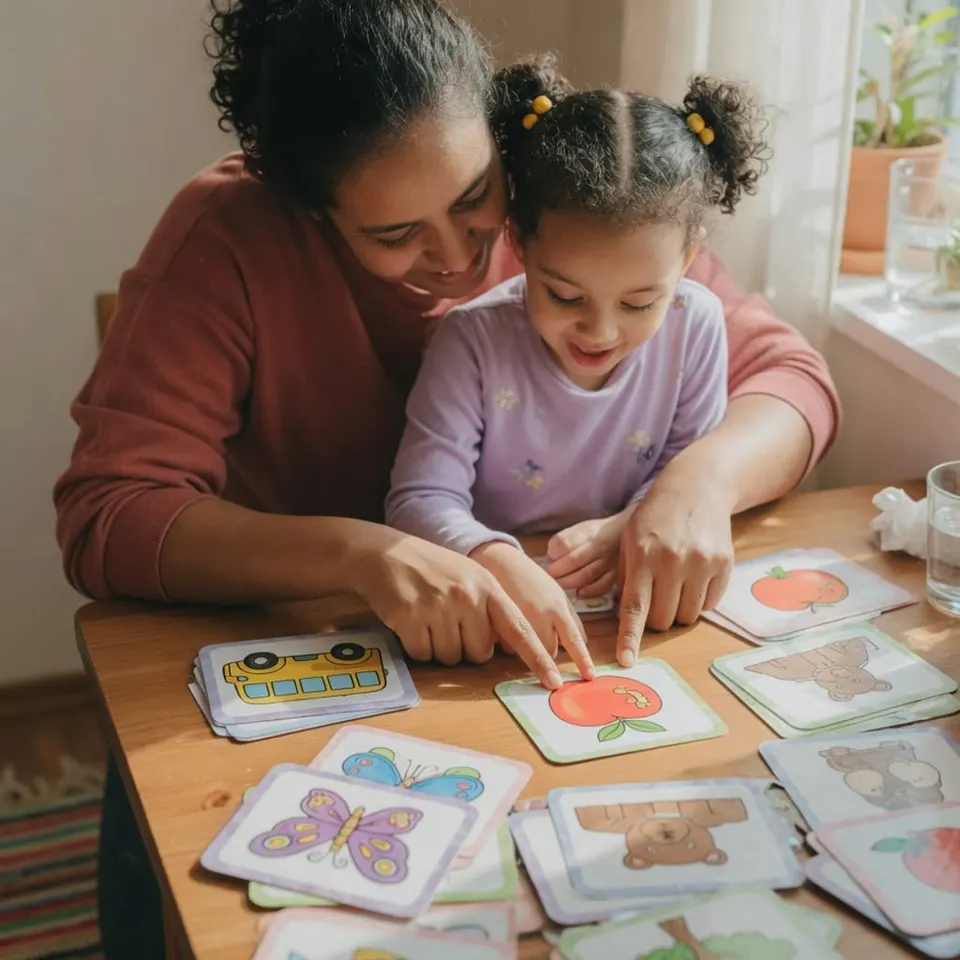
BCBAs use prompting hierarchies to guide the child's behavior. For example, a therapist might physically guide the child's hand to point at a picture, then fade the touch over time. Each successful attempt is reinforced immediately.
Natural Environment Teaching (NET)
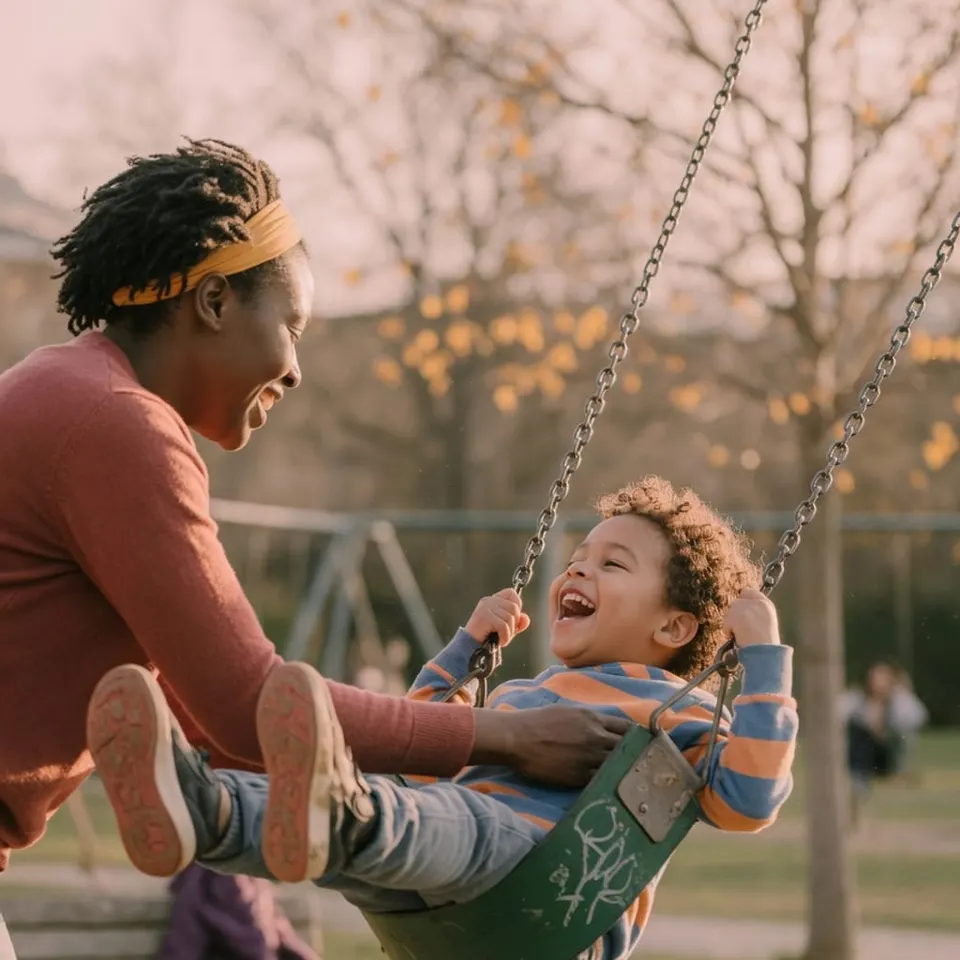
Many ABA sessions happen during play and daily routines, not just at a table. A therapist might pause during a favorite song to invite the child to request more, or hold up two toys and wait for a gaze to indicate choice. These natural interactions build joint attention in real contexts.
Differential Reinforcement
Therapists reinforce only correct joint attention attempts. For instance, if the child grabs a toy without making eye contact, the therapist may not hand it over until the child briefly looks up. This teaches the social contingency of shared attention.
🔗 Related reading: How Many ABA Therapy Hours Does My Child Need? · Autism Therapy Near Me
What to Expect in ABA Sessions for Joint Attention
Every ABA program is individualized, but joint attention targets often appear early in a child's plan. A typical session may include:
- Pairing: The therapist spends time building rapport through fun, preferred activities.
- Massed trials for pointing or gaze following, using a preferred toy or treat.
- Incidental teaching: The therapist follows the child's lead and inserts joint attention prompts into play.
- Data collection: The BCBA tracks every instance of independent and prompted joint attention to adjust the plan.
Parents are encouraged to observe or participate. Many providers offer parent training specifically on joint attention strategies to use at home.
Common Challenges and How ABA Addresses Them
Lack of interest in others
Some children may not find social interaction inherently rewarding. ABA therapy pairs social attention with strong reinforcers (tickles, toys, snacks) to make connection itself become motivating.
Difficulty with eye contact
Forced eye contact can be distressing. ABA uses natural contingencies-like waiting for a brief glance before giving an object-rather than demands. Over time, eye contact increases as a byproduct of successful joint attention.
Repetitive behaviors interfering
If a child becomes stuck on a stim, the therapist may redirect to a shared activity using a high-interest item. Once engaged, the child is less likely to revert to solitary play.
Costs, Insurance, and Accessing ABA Through Our Free Service
ABA therapy is considered medically necessary for autism by most insurance plans and Medicaid programs in all 50 states. Coverage varies by state and plan, but typically includes assessment, therapy hours, parent training, and supervision from a BCBA. Many families pay little to no out-of-pocket cost after deductibles.
However, navigating insurance and finding a qualified BCBA-led provider can be overwhelming. That's where Autism Services Near Me comes in. We are a free matching service that connects families with vetted ABA providers in their area. We help verify your insurance benefits and find providers with availability for joint attention therapy. Simply call our team or fill out our online form, and we'll do the legwork.
Medicaid plans, including state-specific early intervention programs, often cover ABA. Our service helps families understand their options and get started quickly.
Tips for Parents to Support Joint Attention at Home
You don't need to be a therapist to help your child build joint attention. Here are a few simple, research-backed strategies:
- Follow their lead: Join in their play, even if it's lining up cars. Add commentary or actions that invite a shared focus.
- Use exaggerated reactions: When they show you something, respond with big smiles and excitement. That reinforces the sharing behavior.
- Pause during routines: Before blowing bubbles, hold the wand near your face so they're likely to look at you. Then blow.
- Reduce screen time: Interactive social games are far better for joint attention than passive video watching.
Remember, small steps count. A fleeting glance at your face while playing is a triumph. With consistent ABA support and your involvement at home, joint attention can grow stronger every day.